
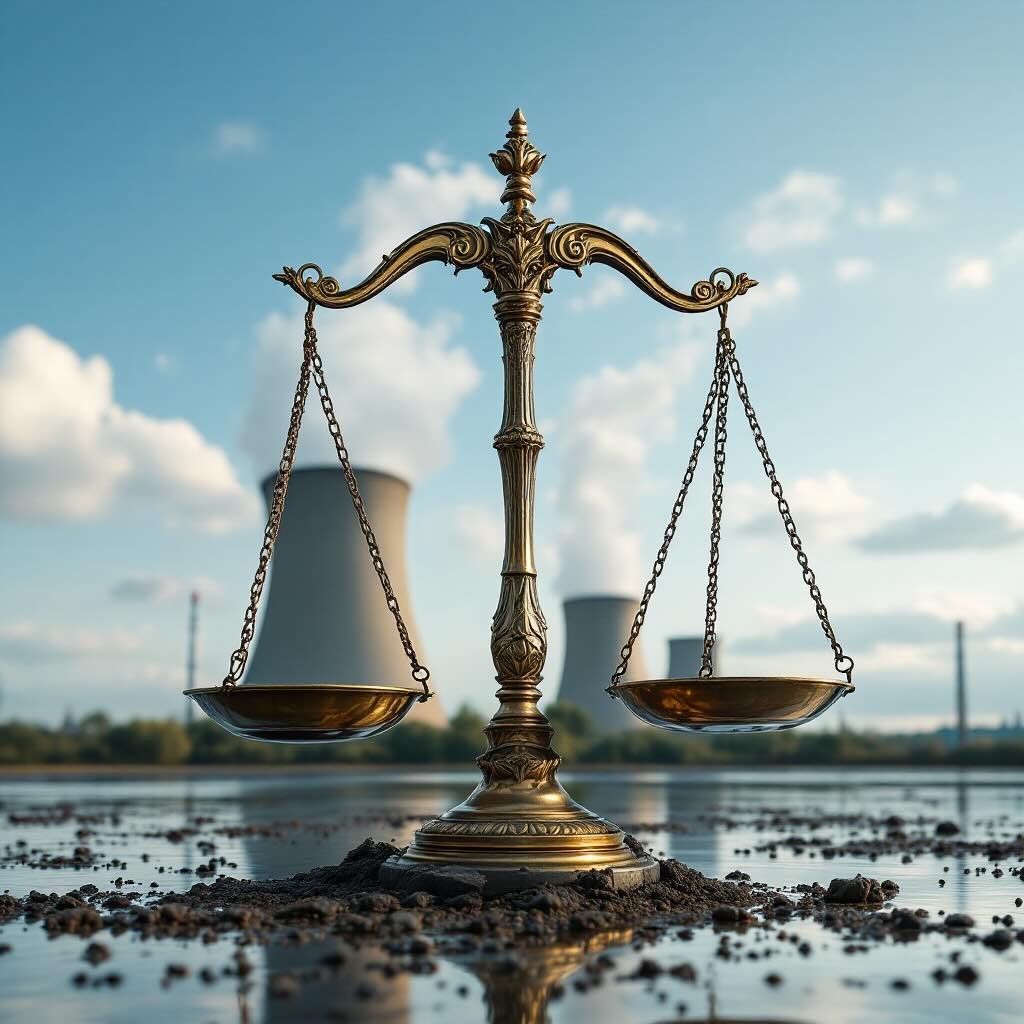
The Trump Administration continues its attacks on science. Not only has Trump driven an estimated ten thousand scientists out of the government, but he has also tried to undermine the credibility of many important contemporary scientific issues. The most recent travesty is the Republican attack on The Reference Manual on Scientific Evidence, an important guide for federal and state judges. In the spring of 2026, 27 Attorneys General from Republican states demanded that the Federal Judicial Center (FJC) remove the chapter on climate change from the manual, or the FJC might be defunded by the federal government. Just a week later, the FJC capitulated. The Republican attack on climate science strips a valuable scientific resource on climate change from judges across the country.
This blog post is the first in a 2-part series. The first is about the demand of the Republican Attorneys General and the Reference Manual on Scientific Evidence. The second – to be posted later this summer – is about the legal case before the Supreme Court that may decide a consequential legal decision: that individual states can hold fossil fuel companies accountable for damages caused by greenhouse gas emissions. Both cases are connected. Republican leaders who have historically been skeptical of climate science and continue to embrace fossil fuels oppose the idea that individuals should be compensated for their losses caused by global warming. Removing the detailed chapter on climate change from the Reference Manual is a means of disarming the judges of the evidence they can use in litigation.
Part 1 – Denying climate evidence by retracting The Reference Manual on Scientific Evidence to federal judges.
Part 2 – Pending Supreme Court decision on climate change accountability
Background
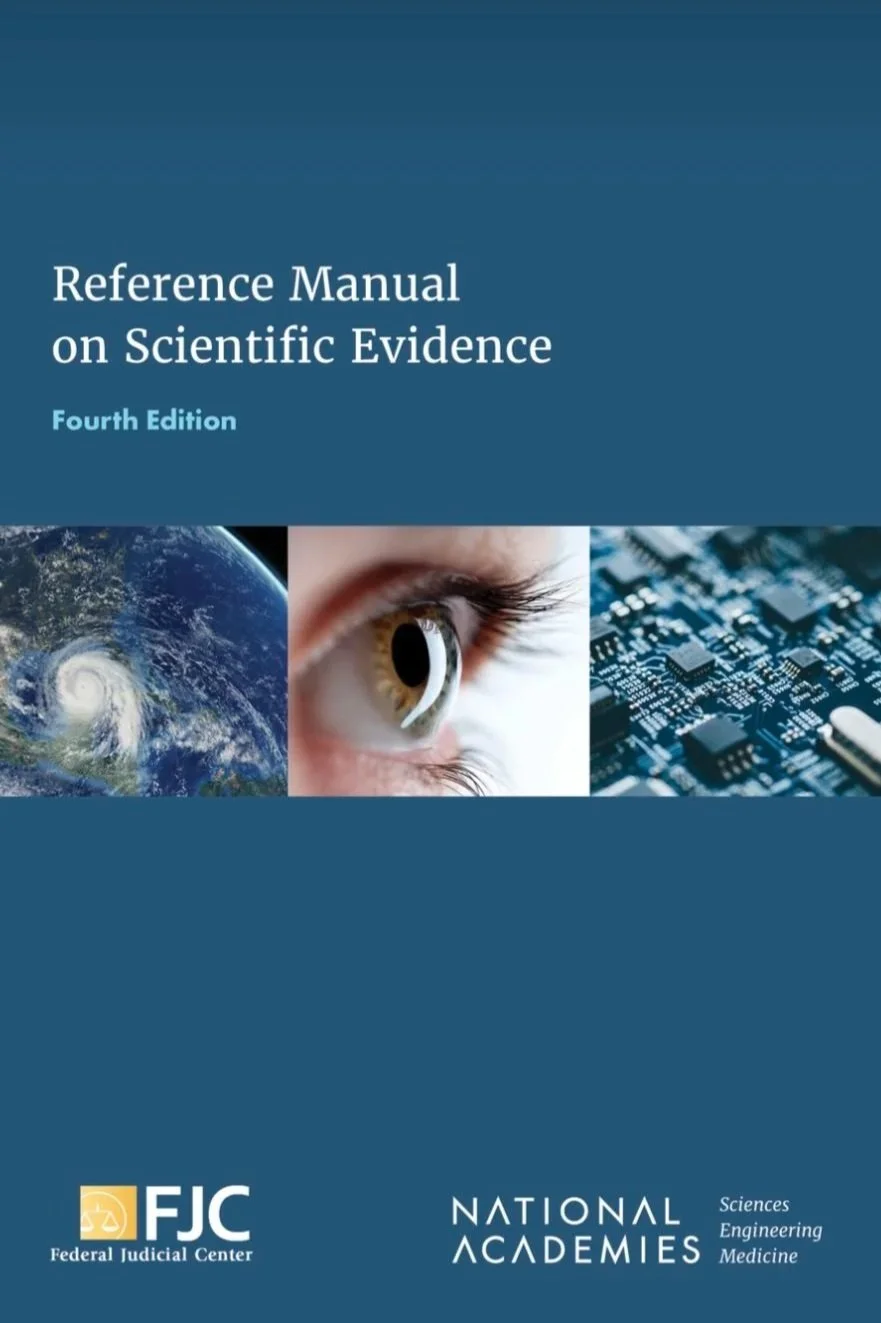
The Reference Manual on Scientific Evidence is a joint product of the National Academies of Sciences, Engineering, and Medicine and the Federal Judicial Center. The 1,600-page guide contains important summaries on complex scientific subjects, including artificial intelligence, neuroscience, engineering, forensic evidence, DNA, survey results, toxicology, and climate change, among others. Each chapter serves as an essential summary so judges can determine what evidence is admissible and credible in cases they adjudicate. The latest edition, the Fourth Edition, was published in late 2025 and included three new chapters on computer science, artificial intelligence, and climate science.
The Reference Manual, as the name indicates, is an important tool for judges who have to understand complex, technical issues while adjudicating court cases. For example, is DNA evidence sufficient to determine the identity of an alleged perpetrator of a crime? How credible is forensic evidence? And how much do negative toxicology reports have to play when determining a suspect's state of mind?
To use the authors’ own description, the manual’s purpose is to “provide accurate, objective information and education and to encourage thorough and candid analysis of policies, practices, and procedures." In layman's terms, it is to provide descriptions of the methodological practices used by scientists in their fields so the judges can make informed decisions about the validity of the evidence presented in cases they adjudicate.
Like most scientific reports, the Reference Manual goes through multiple peer reviews and revisions, then is distributed for review to external independent experts before it is published. Carl Sagan called such a rigorous review process a “self-correcting mechanism” (from Sagan's Cosmos: A Personal Voyage). If a science article gets published in a top scientific journal, it has been scrutinized very carefully by others to make sure that what the author is reporting is accurate.
On January 29 of this year, 27 Attorneys General from Republican states sent a letter to the FJC demanding that the chapter on climate change be removed from the manual. Under threats of being defunded by the federal government, the FJC capitulated to the Republicans and omitted the climate change chapter from the 2025 version (the Fourth Edition).
Contents of the Climate Change chapter
The Reference manual goes into great detail about the validity of climate science. It mentions peer-reviewed requirements (p. 1582), how to distinguish between natural variability and radiative forcing (p. 1568), how science models are developed (p. 1575-1580), and what constitutes credible climate change information for litigation cases (p. 1585). The authors of the chapter emphasize that scientific groups such as the IPCC and U.S. scientific organizations are in consensus that human activities (mainly fossil fuel emissions) are unequivocally responsible for increased global temperatures. Perhaps most germane to the pending legal cases is climate attribution science (starting on p. 1586). The climate chapter of the manual devotes 40 pages (out of 91) to explaining the validity of attribution science. The final two sections of the chapter, “How climate science factors into litigation,” (p. 1627) and “Legal applications of climate science,” (p. 1631) are particularly useful to the litigants. This incontrovertible explanation has undoubtedly gotten the Republicans’ attention that they must (somehow) refute the scientific consensus. Since it is difficult to contest the evidence from dozens of reputable scientific organizations, they have tried to retract the chapter so it is not available to federal judges.
The Republican Attorneys General made the same demand of the National Academies of Sciences, Engineering, and Medicine as they did of the Federal Judicial Center. However, the National Academies refused, stating that they stood by the peer-reviewed chapter. You can find the complete version (including the climate change chapter) on the webpage of the National Academies: https://www.nationalacademies.org/publications/26919. The version on the FJC webpage has been purged of the climate change chapter.
Summary of timeline
January 29 State Attorneys General demand that the FJC remove the chapter on climate change in The Reference Manual on Scientific Evidence.
February 02 Attorneys General send a second letter to the House and Senate Judiciary Committees recommending they investigate and possibly defund the FJC.
February 06 The FJC alerts the Republican Attorneys General that it has removed the climate change chapter from the manual. The National Academies refused to delete the climate chapter.
February 25 The authors of the climate change chapter write a rebuttal to explain the damage the omission of the chapter may cause.
March 02 28 authors of the Reference Manual write an open letter about the attack on science and the independence of the judiciary.
Summer/Fall 2026 Imminent decision by the Supreme Court on whether states can hold fossil fuel companies accountable for natural disasters caused by the companies’ greenhouse gas emissions (see part 2 of this blog, forthcoming in summer/fall 2026).
Significance
The significance of this action is immense. The Sabin Center for Climate Justice at Columbia University estimates that 2,000 climate change cases are before U.S. courts in 2025. Some very important decisions are imminent - including the city and county of Boulder, Colorado versus Exxon Mobil Corp. and Suncor Energy Inc. - and may determine whether states can be held accountable for the pollution and damage that fossil fuel companies produce within those states. Since there seems to be very little political will to wean ourselves away from the dangerous greenhouse gases created by human activity, the next best strategy may be to make fossil fuel companies accountable for the planet-heating pollution they create.
Citation: National Academies of Sciences, Engineering, and Medicine and Federal Judicial Center. 2025. Reference Manual on Scientific Evidence: Fourth Edition. Washington, DC: National Academies Press. https://doi.org/10.17226/26919.